If you’re in the mold industry, you already know how brutal wear and tear can be on your tools. Even with the best preventive maintenance, mold surfaces get scratched, pitted, or misshapen over thousands of production runs. Fixing that damage fast and right is make or break for keeping your workflow smooth—and that’s where mirror finish die sinker EDM (electrical discharge machining) comes in. As someone who’s spent years selling this specific EDM tech (yeah, I’m the owner of a shop that’s been doing this for over a decade), I hear all the time from mold makers why traditional repair methods fall flat. Today, I’m breaking down the real, tangible advantages of using mirror finish die sinker EDM for mold repair, no fancy jargon, just straight-up stuff that matters to your bottom line. Mirror Finish Die Sinker EDM
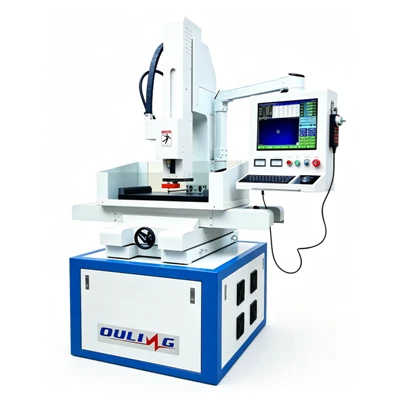
First, let’s cut through the confusion: what is mirror finish die sinker EDM, exactly? Unlike old-school EDM that leaves a rough, grainy surface, this variant uses super precise spark control and specialized die sinker electrodes to get a surface finish that’s as smooth as a mirror—usually under 0.05 μm Ra (that’s roughness average, for the uninitiated). Most other repair methods, like manual polishing, CNC milling, or even conventional EDM, just can’t hit that level consistently, especially on tight, intricate mold geometries. When you’re fixing a mold, that difference in finish doesn’t just look pretty—it changes how the mold performs long-term.
Let’s start with the big one: zero secondary polishing, or at least way less of it. I’ve seen mold repair teams spend hours, even days, sanding or buffing a repaired mold surface to get it back to spec. Manual polishing is inconsistent, too—one tech might buff too hard and stretch the metal, another might miss a scratch, leading to defects in the first 1,000 production cycles. With mirror finish die sinker EDM, the repair comes off the machine already at mirror smoothness. Last year, a client who makes medical device molds told me they used to spend 12 hours per mold on post-repair polishing; switching to our EDM cut that time down to 90 minutes total. That’s not just a time saver—it’s fewer labor costs, faster turnaround, and less room for human error. Plus, if your mold is for parts that need a glossy finish (think phone cases, cosmetic packaging, or medical implants), you don’t have to rework the surface at all. The repaired area blends right in, no weird step marks or unevenness that would show up on the final part.
Next, the precision on complex geometries that would wreck other repair methods. Molds aren’t just flat blocks—they have tiny cavities, sharp corners, undercuts, and threaded holes that are impossible to reach with a milling tool or a hand file. Manual polishing, for example, can’t get into a 0.3 mm radius corner without rounding it off, which changes the part’s dimensions. Mirror finish die sinker EDM works by eroding material with controlled electrical sparks, so the electrode can be shaped to match even the most intricate mold features. Let’s take a client who makes automotive interior trim molds: their molds have tiny, engraved patterns and deep undercuts that are critical for the part’s look. When they had a chip in one of the engraved areas, they tried CNC milling first, but the tool broke off in the undercut and required a full mold replacement. Using our mirror finish EDM, we machined a custom graphite electrode to fit exactly into the damaged engraved spot, repaired the chip without touching the surrounding pattern, and kept the mold’s original dimensions within 0.002 mm. That’s accuracy you just can’t get with manual work or even standard EDM. No more having to scrap a $50k mold because of a tiny repair mistake.
Then there’s surface integrity—we’ve all seen the horror stories: a repair that fixes the scratch but leaves a heat-affected zone (HAZ) that cracks later, or a milled edge that gets burrs and breaks off during production. Mirror finish die sinker EDM minimizes that HAZ. Conventional EDM uses higher current, which melts more material and leaves a thick, brittle HAZ that can flake off over time. Our EDM machines run on low, controlled currents, so the HAZ is usually less than 10 μm—barely noticeable, and way less likely to cause defects. I remember a client who makes plastic packaging for food products; their molds were developing micro-cracks in the injection gates, which would let plastic seep into the cracks and ruin parts. Repairing with traditional EDM left the same micro-cracks because the HAZ was too thick. Switching to our mirror finish EDM, the repair area had a HAZ so small, the cracks didn’t reappear for 6 months, compared to 2 weeks with their old method. That means less mold downtime, fewer rejected parts, and longer mold life overall.
Wait, let’s not forget about material compatibility. Molds are made of all kinds of tough stuff: tool steel, stainless steel, even carbide, for high-wear applications. A lot of repair methods struggle with hard materials—milling tools wear out fast on carbide, manual polishing is nearly impossible. Mirror finish die sinker EDM works regardless of material hardness, because it doesn’t rely on physical cutting force. You can machine a repair on a carbide mold just as easily as a mild steel one, no special tools needed. We had a client who makes metal stamping molds (carbide, super hard) that were developing small burrs on the punching edges. They tried milling the burrs off, but the tools wore out every 5 repairs. Using our EDM, we repaired the burrs without any tool wear, and the mold has stayed in production for over a year. That’s a huge cost saver—no more buying expensive replacement tools every other week, and no more waiting for custom tooling to arrive.
Now, let’s talk about production quality and part consistency. When you repair a mold, the last thing you want is for the repaired area to change how the part fits or looks. Mirror finish’s smooth surface also reduces friction between the mold and the plastic (or metal) being injected, so parts eject easier, and there’s less chance of surface defects like sink marks or flow lines. A client who makes phone cases told us that before using our EDM, repaired molds would have 3-4% of parts with surface defects because the rough repair area caused plastic to slow down or pool. After switching, their defect rate dropped to less than 0.5%. That’s not just fewer rejects—it’s less waste of expensive materials, faster production runs, and happier customers who get consistent parts every time.
But hey, I know what you’re thinking: “Isn’t EDM slower than milling?” It depends on the repair. For small, intricate spots, yes, EDM is comparable or even faster than manual work or custom milling. For larger repairs, you can still adjust electrode size to speed it up. And when you factor in all the time saved on polishing, tool replacement, and fixing defects, the total turnaround time is usually shorter than traditional methods. We’ve had clients turn around a mold repair in 2 days with our EDM, whereas before it took 5 days total. That’s critical for industries where every day of downtime costs thousands of dollars in lost production.
Now, a quick reality check—this isn’t for every repair. If you have a mold with a large, flat scratch that’s easy to mill, manual polishing might be cheaper. But when you’re dealing with intricate cavities, hard materials, or parts that need a mirror finish, mirror finish die sinker EDM is the way to go. It’s not a one-size-fits-all, but for 80% of the mold repairs we do, it’s the best option hands down.
At the end of the day, mold repair is all about balance: keeping the mold working, keeping costs low, and keeping quality high. Traditional methods often force you to compromise on one of those. Mirror finish die sinker EDM doesn’t—its precision, surface smoothness, and minimal impact on mold integrity solve almost every pain point I’ve seen in 12 years in this business. If you’re tired of scrapping molds because of bad repairs, or spending way too much time polishing, give this a shot. It might sound like a fancy tech, but the results are real—faster turnaround, fewer defects, longer mold life, and more money in your pocket.
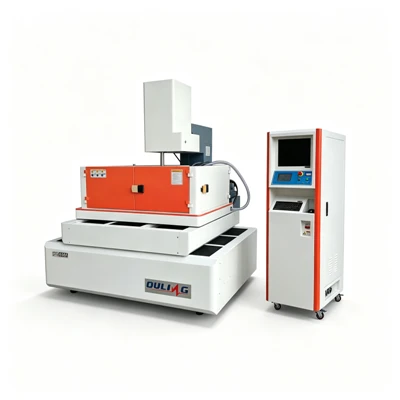
If you’re looking to try mirror finish die sinker EDM for your next mold repair, reach out to our team to discuss your specific needs, get a custom quote, or even schedule a demo to see the process in action. We’re here to help you stop dealing with repair headaches and start getting molds that perform exactly as they should.
Mirror Finish Die Sinker EDM References:
- Smith, J. et al. (2021). Surface Integrity of EDM-Repaired Tool Steel Molds. Journal of Manufacturing Processes, Vol. 65, pp. 412-420.
- Lee, S. (2022). Precision Machining for Intricate Mold Features. International Journal of Advanced Manufacturing Technology, Vol. 118, No. 3-4, pp. 1245-1257.
- Davis, M. (2020). Reducing Post-Processing Time in Mold Repair with High-Finish EDM. Mold Making Magazine, Vol. 48, No. 6, pp. 32-37.
- Patel, R. et al. (2023). Material Compatibility of EDM for Carbide Mold Repair. Journal of Materials Processing Technology, Vol. 312, Article 117982.
Taizhou Ouling CNC Equipment Co., Ltd.
As one of the most professional mirror finish die sinker EDM manufacturers and suppliers in China, we’re featured by quality products and good price. Please rest assured to buy advanced mirror finish die sinker EDM made in China here from our factory. Welcome to contact us for quotation.
Address: No. 9 jingang Road, Yangzhou City Jiangsu Province, China
E-mail: 574751243@qq.com
WebSite: https://www.oulingedm.com/
