If you’ve ever stood in front of a home renovation project, staring at a wall that meets a curved archway, a bay window, or even a subtle rounded corner and thought, “Wait—can PVC trim moulding be bent?” you’re not alone. I’ve had this exact question ping my inbox every single week for the past eight years, ever since my small family-owned PVC trim moulding business started serving contractors, handymen, and DIYers across the Midwest. Most folks come to me because they’ve tried bending wood, only to watch it split or warp half an hour into the job, or they’ve paid way too much for custom curved trim that arrived weeks past their deadline. The short answer is yes—PVC trim moulding can be bent—but it’s not as simple as grabbing a piece and forcing it into a curve. There’s a science to it, and I’ve seen too many people waste materials (and money) skipping the basics because they thought PVC was just like plastic or wood. Let me break this down like I do for every customer who calls me panicking about a curved trim problem. PVC Trim Moulding

First, let’s get one thing straight: not all PVC trim moulding is made the same. I can’t tell you how many times a customer shows up with a cheap, thin 1/8-inch PVC strip from a big-box store and asks why it won’t bend. That’s because the composition, thickness, and design of the trim make all the difference. The PVC we manufacture for our clients is a cellular PVC, not the brittle, thin PVC used for cheap pipe or cheap trim. Cellular PVC has tiny, air-filled cells throughout the material that give it flexibility without sacrificing the rigidity you need for exterior trim, window casing, or door headers. But even with that, there are limits. The key factor when bending PVC trim is the minimum bend radius. That’s the tightest curve the material can handle without cracking, warping, or losing its structural integrity. For our standard 1/2-inch thick PVC trim moulding, the minimum bend radius is roughly 12 inches. If you try to bend that into a curve with a radius smaller than 12 inches, you’ll almost certainly end up with a split along the outer edge of the curve—trust me, I’ve seen dozens of samples come back like that. On the other hand, our thinner 1/4-inch trim can handle a 6-inch bend radius, which is perfect for smaller curved details like cabinet trim or arched door tops. It all comes down to the material density and thickness, which is why custom fabrication matters so much.
Now, the process of bending PVC trim moulding is where most people go wrong. You can’t just grab a heat gun (or a hair dryer, which is way too weak) and start shaping it. I always tell customers to start with a heat source that can get the PVC to a specific temperature—around 180 to 200 degrees Fahrenheit. At that point, the cellular PVC becomes malleable, not melted. Melted PVC is a disaster; it gets lumpy, discolors, and loses that smooth finish everyone wants for trim. To get that even heat, I recommend using a convection heat blanket, or a portable heat chamber if you’re working on a large piece. If you’re doing a small DIY project, a heat gun set to low, moving it in slow, even strokes 6 to 8 inches away from the trim works too—just don’t stay in one spot too long, or you’ll burn it.
Once the trim is heated, you need to form it around a solid mold. That could be a piece of plywood cut to the exact curve you need, a pipe with the right diameter, or even a series of weighted dowels clamped together. The key here is to hold the shape while the PVC cools, because it will retain its curve as it hardens back to room temperature. If you let it cool on its own without securing it, it will spring back a little—usually about 10 to 15 percent of the curve you tried to form. That’s not a huge deal for gentle arches, but for tight curves, it can throw off your entire project. I learned that lesson the hard way on my first big commercial job. Back in 2017, we were doing trim for a new boutique that had three arched entryways. I tried bending the trim freehand after heating it, and by the time I got it nailed up, it had sprung back so much that the arches looked lopsided. I had to scrap two pieces and remake them, costing us both time and materials. Now, every time I talk to a customer, I drill that into them: form it, clamp it, hold it until it’s fully cool. No exceptions.
But wait—what if you need a curve tighter than the minimum bend radius of your trim? That’s where I usually suggest laminating multiple pieces of thin PVC trim together. For example, if you need a curve with a 4-inch radius, you could cut three 1/4-inch pieces of our cellular PVC, heat each one individually, and form them around a mold. Once they’re all cool, glue them together with PVC adhesive, and you’ll have a piece that’s thick enough to hold the tight curve without cracking. I’ve used this trick on everything from curved window sills to decorative trim for residential porches, and it works every time. Just make sure you sand the edges of the pieces before gluing, so the adhesive bonds evenly, and clamp the laminated piece together while it cures for at least 24 hours.
Another common question I get is about bending PVC trim moulding for outdoor use. A lot of contractors worry that if you bend it, it will get damaged by sunlight, rain, or temperature changes. The truth is, our cellular PVC is inherently weather-resistant—way more than wood or even some types of composite trim. But if you bend it correctly, following the minimum radius and heat process, that flexibility actually makes it more durable, not less. Wood will crack or split when bent outdoors as the temperature changes, but PVC returns to its shape (as long as you formed it correctly) and doesn’t warp or rot. I have a job from 2019 where we bent PVC trim around a curved porch railing in Texas, where temperatures swing from 20 degrees in winter to over 100 degrees in summer. That trim is still perfect, no cracks, no fading, no spring back. It’s one of my proudest projects, and it’s a testament to how well bent PVC trim holds up outside.
Of course, there are a few mistakes that even experienced people make when bending PVC trim moulding. The biggest one is using too much heat. If you go over 220 degrees Fahrenheit, the PVC will start to melt, blister, and discolor. You’ll end up with a piece that looks cheap and has structural weaknesses. Another mistake is forcing the bend too quickly. You have to take your time, heating the entire length of the curve evenly, not just one spot. If you heat a small section and bend it, you’ll get a sharp crease that will crack the first time the temperature drops. And finally, don’t try to bend trim that’s already been painted. The paint will crack and peel when you form the curve, so always bend the trim first, then paint or coat it once it’s fully cooled and set.
I know there’s a lot to remember, which is why I always tell customers that if you’re working on a large or complex curve, it’s worth ordering pre-bent PVC trim from a reputable supplier like us. We have the tools to heat and form trim to almost any curve, with precise consistency, so you don’t have to deal with the hassle of DIY bending. We also cut the mold to your exact specifications, so there’s no spring back, and we ensure the minimum bend radius is never exceeded. For small projects, though, bending PVC trim yourself is totally doable—you just have to follow the steps, take your time, and stick to the rules.
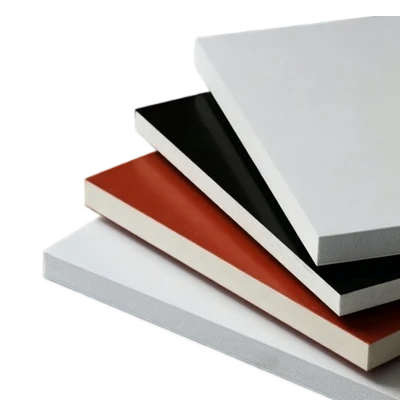
At the end of the day, PVC trim moulding being bent is one of the best features of the material. It opens up so many design possibilities that were once only possible with expensive custom wood or metal trim. You can add curved arches, bay window trim, even decorative curved crown molding to any project, without the stress of dealing with wood’s tendency to split or warp. I’ve seen clients turn bland, straight homes into unique, eye-catching spaces just by adding a few carefully bent PVC trim pieces. It’s a small change that makes a huge impact.
PVC Advertising Board If you’re working on a project that requires curved trim, whether it’s a small DIY bathroom remodel or a large commercial build, don’t write off PVC trim moulding just because you’re worried about bending it. It’s flexible, durable, and cost-effective—if you do it right. If you’re not sure where to start, or if you need custom bent trim for your project, don’t hesitate to reach out. We’ve helped hundreds of customers navigate the process, from picking the right thickness for their curve to providing tips for successful bending, and we’d be happy to help you too.
References
- American Society for Testing and Materials. Standard Specification for Cellular Poly(Vinyl Chloride) (PVC) Construction Panels and Trim. ASTM International, 2021.
- National Association of Home Builders. “Plastic Trim: An Overview of Performance and Installation.” NAHB Research Center, 2020.
- PVC Industry Association. “Processing and Fabrication of Cellular PVC for Building Products.” PVCIA Technical Bulletin, 2019.
- Construction Specifier. “Bending Trim: Tips for Working with PVC, Wood, and Composite Materials.” Constructech Media, 2022.
Jameson Performance Plastics Co., Ltd.
With abundant experience, we are one of the most professional PVC trim moulding manufacturers in China. We warmly welcome you to wholesale customized PVC trim moulding at competitive price from our factory. If you have any enquiry about free sample, please feel free to email us.
Address: No.97 Liuquan Road, Zibo city, Shandong, China.
E-mail: info@jamesonplastics.com
WebSite: https://www.jamesonplastics.com/
