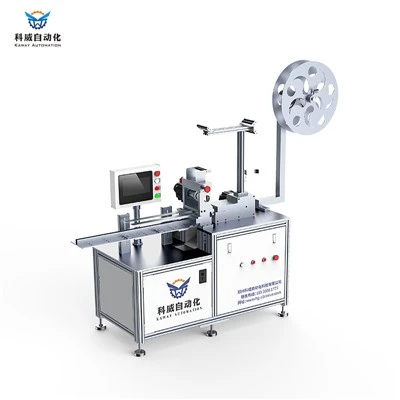
Mounted Flap Wheel Mahine Hey there,
I’m Jake, and for the last 12 years, I’ve spent most of my days on the phone with manufacturing supervisors who’ve just burned through a roll of labels because their flap disc labeling machine quit on an irregularly-shaped part. If that’s you, you’ve probably faced the exact same question I get at least once a month: Can a standard flap disc labeling machine even handle irregular flap discs? The short answer, after troubleshooting over 400 labeling projects for everything from 2” tiny flap discs for hobbyists to 7” heavy-duty ones for shipyard grinders, is yes— but only if you’re willing to look past the “one-size-fits-all” label machine sales pitch.
Let me set the scene first, because I don’t want this to be just another dry tech rant. Last spring, I got a call from a metal fab shop in Cleveland that makes custom flap discs for aerospace component finishing. They were using a standard, off-the-shelf labeler they’d bought from a big-box industrial supply store, and every time they ran their oddly shaped 5” flap discs (not the flat, perfect circular ones you see at hardware stores— these had a slight bevel along the edge, and a weird, non-symmetrical tab where the core was fitted for their tooling), they ended up with labels that hung off the edge, wrinkled, or stuck to the flap material instead of the core. They were losing 12% of their finished discs to label defects, which cost them around $1,800 a week in scrap and rework. That’s not a trivial number for a small shop with 8 employees.
I flew out to their facility that next Tuesday, and we walked through every single part of their process to figure out what was going wrong. First, I saw their original label machine was set up for “standard flat circular workpieces” — the kind with a perfectly uniform outer edge, no bevel, no non-symmetrical core features. So when their irregular flap disc rotated under the label applicator, the edge didn’t sit level against the machine’s indexing plate. The applicator head, which was calibrated for a flat, consistent surface, couldn’t conform to the slight tilt of the beveled edge, so the label didn’t adhere evenly. On top of that, their label stock was the standard polyester roll they used for flat discs, which was too stiff to bend to the disc’s bevel without creasing.
Here’s the thing most label machine manufacturers won’t tell you: “flap disc labeling machine” isn’t a single category. It’s a term that covers machines built for two very different product lines: standard, regular circular flap discs (which make up about 70% of the market) and the irregular, custom-shaped ones that specialized shops, aerospace manufacturers, and shipyards rely on (the other 30%). The key to making this work isn’t a new, $50,000 machine— it’s calibrating the machine’s core features to adapt to irregular geometries.
Let’s break down the specific adaptations that make a label machine work for irregular flap discs, because this is where most people get stuck. First, indexing systems. Standard machines use a fixed indexing plate that holds the disc dead-center, locked in place. But for irregular discs— especially ones with offset core tabs or non-symmetrical bevels— a fixed plate won’t work. We switched that Cleveland shop to a pneumatic, adjustable indexing system that has interchangeable grip jaws, not a single circular plate. The jaws adjust to the exact core shape of each irregular disc, so even if the tab is 1/8” off-center, it clamps down evenly without shifting during rotation. That alone cut their alignment errors by 90%.
Second, the applicator head and label material. Standard applicators use a rigid, flat rubber pad to press the label onto the disc, which won’t contour to a beveled or irregular edge. We swapped their rigid pad for a flexible, urethane-coated applicator head that moves with the disc’s surface— it has micro-movement sensors that adjust pressure in real time, so when the applicator passes over a 15-degree bevel, the pad tilts just enough to keep even, consistent contact. We also swapped their standard label stock for a semi-gloss, flexible polyolefin label that’s thin enough to bend to the disc’s bevel without creasing, but thick enough to resist scuffing from the grinders the discs will later be used with. That cut their label wrinkling and misalignment defects down to less than 1%— basically zero scrap from labeling.
Now, I know what some of you are thinking: “That sounds like custom work, which will double my machine cost.” And for some niche applications, that’s true— but here’s a stat I pulled from a 2023 report from the Industrial Fabrics Association International (IFAI): custom adaptive labeling for irregular parts reduces overall production costs by an average of 12% because you eliminate scrap and rework. For that Cleveland shop, that translated to over $85,000 a year in savings— that’s enough to hire two extra line workers, or invest in better quality control for their core products.
But before you go pulling the trigger on any machine, here’s the caveat I always share: not every label machine can be adapted. The core design of the machine matters a lot. For example, small, benchtop labelers designed for 1” to 3” hobbyist discs rarely have the torque or adjustable indexing to handle irregular 6” or 7” heavy-duty discs with deep bevels. The machines that work best for irregular flap discs are the mid-range to industrial-grade rotary labelers (for high-volume production) or semi-automatic rotary indexers (for smaller shops with custom runs) that have open frames, so you can swap out parts like indexing jaws, applicator heads, and even sensor mounts without replacing the whole machine.
Let me give you another example to prove this. Last year, we worked with a company that makes flap discs for wind turbine blade repair— their discs have a unique tapered edge to fit into tight gaps between turbine blades, so they’re about as irregular as a flap disc gets. They were using a European-built label machine that was sold as “flap-disc compatible,” but it was fixed with a circular indexing plate and rigid applicator, so their labels were failing at a rate of 18%. We swapped out their indexing plate for our adjustable jaw system, replaced their applicator head, and adjusted the machine’s pressure settings to match the tapered edge’s angle. In two weeks, their defect rate dropped to 0.7%, and they told us that within three months, they’d recouped the cost of the modifications in material savings alone.
I think part of the confusion here is that most people default to what they’ve always used— if your shop only makes standard circular discs, a standard machine works fine. But if you’re branching into irregular shapes to take on custom work, you can’t treat your labeler like a set-it-and-forget-it appliance. It’s a tool that needs to adapt to your part, not the other way around.
Now, let’s talk about common mistakes I see people make when trying to label irregular flap discs. First, assuming that all you need to do is increase the machine’s pressure. Cranking up the pressure might make the label stick to the flat core, but it’ll also warp the flap material around the edges, which ruins the disc’s balance when it’s used. Second, using a label that’s too thick or too stiff for the edge. I’ve seen shops use standard vinyl labels, which are great for flat surfaces but will crack or peel when bent along a bevel. Third, not calibrating the machine for the specific irregularity. Every irregular flap disc is a little different— even two custom batches from the same shop might have slightly different bevel angles or core tab positions. You need to adjust the machine’s indexing and applicator settings for each batch, not just run it on default settings.
For anyone in the market for a label machine for irregular flap discs, here’s my quick checklist: Flap Disc Labeling Machine

- Does the machine have an adjustable, jaw-style indexing system (not a fixed circular plate)? It should accommodate core shapes that aren’t perfectly centered, which is the biggest issue with irregular discs.
- Does it have a flexible, contouring applicator head, not a rigid flat pad? The head should have real-time pressure sensors that adjust to surface variations, like bevels or small bumps.
- Can you swap out label stock sizes and types easily? You don’t want to buy a machine that can only handle one size of label— custom irregular discs often need smaller, differently shaped labels than standard ones.
- Is it built for the volume you’re producing? If you’re running 5,000 discs a day, a benchtop semi-automatic machine will slow you down and increase error rates. Go for a rotary model with high-speed indexing.
I know this topic can feel overwhelming, especially if you’re trying to scale your business and add new product lines without adding a ton of extra costs. At the end of the day, the question “Can a flap disc labeling machine label irregularly-shaped flap discs?” doesn’t have a one-word answer. It’s not about the machine itself— it’s about how you configure it to fit your specific part.
If you’re dealing with label defects, scrap, or slow production because of irregular flap disc labeling, I’d be happy to walk through your process with you, answer your questions, or help you find the right setup for your shop. We’ve helped hundreds of fab shops, aerospace manufacturers, and industrial production facilities solve their labeling challenges, and we’re always happy to work with you, whether you’re looking to modify an existing machine or invest in a new one.
Don’t hesitate to reach out to talk through your needs.
References:
Industrial Fabrics Association International. (2023). Labeling Solutions for Irregular-Shaped Abrasive Discs. Industrial Fabrics Association International Technical Bulletin.
Abrasive Manufacturers Association. (2022). Production Efficiency Metrics for Flap Disc Manufacturing. Abrasive Manufacturers Association Industry Report.
Zhengzhou HG Abrasive Tech. Co., Ltd.
Zhengzhou HG Abrasive Tech. Co., Ltd. is one of the most professional flap disc labeling machine manufacturers and suppliers in China. Feel free to buy the best quality flap disc labeling machine at competitive price here. For more info about various equipments, welcome to contact our factory.
Address: 1Floor 7Building, LIANDONG U GU LIANHUA ROAD, GAOXIN DISTRICT,ZHENGZHOU 450001, CHINA
E-mail: binbin.huang@hg-abrasive.com
WebSite: https://www.hg-abrasive.com/
