If you’ve ever walked into a commercial workshop, a residential basement, or a temporary event space, chances are you’ve stood beneath an alum beam and not even realized it. As a supplier who’s worked with these versatile structural components for over a decade, I get asked one question more than any other: “What’s the maximum span these beams can handle?” It’s not a one-size-fits-all answer, and I’ve seen too many contractors cut corners by guessing at span limits—leading to wobbly supports, delayed projects, and even safety risks. Today, I’m breaking down the science behind alum beam spans, how we calculate them, and what you need to know to get it right. Alum Beams
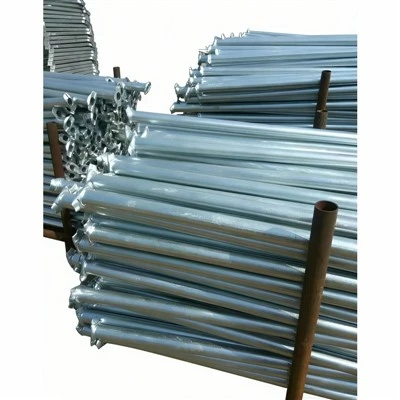
First, let’s clarify what we mean by “alum beams.” We’re not talking about the thin, frangible foil you wrap a sandwich in. These are structural aluminum beams, most commonly made from 6061 or 6063 aluminum alloy, the two workhorses of the industry. 6061 is stronger, used for load-bearing applications, while 6063 is more malleable, often for decorative or lighter support jobs. The alloy isn’t the only factor in span, though—let’s start with the basics of structural engineering that govern all beam spans, not just aluminum.
A beam’s maximum span is the longest distance it can safely cover between two supports (like columns or walls) without sagging too much, bending beyond its design limits, or failing completely. Two core rules apply here: deflection and bending stress. Deflection is how much the beam sags under load. For most building codes, the maximum allowed deflection is 1/360 of the span length. So if a beam spans 10 feet, it can’t sag more than 1/3 of an inch at its center—any more, and you might notice uneven floors, cracked drywall, or compromised structural integrity long-term. Bending stress is the force that pulls the beam’s bottom edge and compresses its top edge when loaded. If that stress exceeds the aluminum’s yield strength (the point it bends permanently, not just temporarily), that’s a failure waiting to happen.
Now, let’s get to the numbers, but with a big asterisk: these are approximate, and always consult a structural engineer for your specific project. For standard 6061-T6 aluminum beams (the most common load-bearing grade) used in residential or light commercial applications, the maximum span can range from 8 feet to 30+ feet, depending on two key variables: beam size and load. Let’s break this down by common beam profiles, since not all alum beams are the same shape. I-beams (or flanged beams) are the most efficient for load bearing, because their flanges hold most of the tension and compression, while the web keeps the shape rigid. Square tubing and rectangular tubing are also popular, especially for smaller, budget projects.
Take a 4×4 rectangular aluminum tubing beam (a staple for small projects like supporting a home addition or a small patio cover). If it’s 1/4-inch thick and made of 6061-T6, and it’s only carrying a light load—say, a 10-pound per square foot live load (the weight of people, furniture, or light materials) plus a 20-pound dead load (the weight of the beam itself and any permanent structures on top)—its maximum span is around 8 feet. That’s tight, but it’s safe. Move up to a 6×6 rectangular tube, same thickness and alloy, and that span jumps to about 14 feet. If you go to an 8×8 I-beam (the shape that distributes weight better than a rectangular tube of the same cross-sectional area), and increase the wall thickness to 3/8-inch, the span jumps to roughly 22 feet for the same light load.
Now, if the load is heavier—say, a commercial space with a 50-pound per square foot live load (equipment, large groups of people, or heavy storage) plus a 30-pound dead load—those numbers drop. That same 8×8 I-beam that spanned 22 feet for light loads? Now it’s maxed out at about 15 feet. For a 10-inch deep I-beam, same alloy and wall thickness, that heavy load span is around 18 feet. What about longer spans? I’ve worked on a temporary event stage that needed a 32-foot clear span, no columns in the middle. For that, we used a custom-fabricated 12-inch deep 6061-T6 I-beam, reinforced with an internal support webbing, and paired it with heavy-duty end brackets rated for concentrated load. That beam didn’t sag more than 1/2 inch under a full load of 10,000 pounds for the stage, and it passed all structural inspections.
Wait a second—why don’t you see these numbers on our product pages? Because context is everything. A beam’s span isn’t just about its length; it’s about how it’s supported at the ends. Are the ends sitting flat on a column, or are they bolted to a steel plate for a rigid connection? Rigid connections (where the beam is anchored firmly, so it can’t twist or shift at the ends) can increase span by 10-15% compared to simple “pin” supports, where the beam just rests on top of a column. Then there’s environmental factors: if the beam is outside, exposed to rain, snow, or temperature swings, does that affect its performance? Aluminum is corrosion-resistant, which is a huge plus over steel, but extreme cold can slightly reduce its yield strength (though not enough to impact most standard spans, as long as the beam is sized appropriately for cold-zone loads like heavy snow).
I’ve seen mistakes that make contractors kick themselves. Last year, a local general contractor came to us panicking because he’d installed 6×6 rectangular alum beams he bought from a big-box store, expecting them to span 18 feet for a small retail backroom. They sagged 2 inches in the middle, enough to crack the drywall ceiling below. Turns out, he didn’t account for the 40-pound per square foot load of stacked inventory on top of the beams, and he used 1/8-inch thick tubing, not the 1/4-inch thick he should have. Those 6×6 beams can only span 10 feet for that heavy load, not 18. We switched him to 8×10 rectangular tubing, 3/8-inch thick, and he got a safe 16-foot span, no sag. That’s the kind of misstep we help our customers avoid every day.
Another common question: can aluminum beams span longer than steel? It’s a myth that steel is always better for long spans. Steel is stronger per unit weight, so a steel beam will be lighter for the same load capacity, but aluminum has other perks—lower cost for small projects, faster installation because it’s lighter (a 20-foot alum beam weighs about 50 pounds, while a same-length steel beam for the same span is over 80 pounds), and no need for corrosion treatment. For spans under 30 feet, alum beams are often a more practical, cost-effective choice than steel. For spans over 35 feet, though, steel usually becomes the better call because its higher strength means you don’t need as deep a beam, which saves on headroom in buildings.
So, what’s the takeaway? The maximum span of alum beams is not a fixed number—it’s a calculation based on alloy, cross-sectional shape, wall thickness, load type, support condition, and environmental factors. There’s no shortcut to getting this right. As a supplier, our job isn’t just to sell you a beam; it’s to help you size it correctly. We provide free span calculators on our site that let you input your project details (load, span, support type) and get a recommended beam size, or you can send us your project specs and our structural team will run a custom calculation for you.
If you’re planning a project that relies on alum beams—whether it’s a garage, a commercial mezzanine, a temporary event structure, or a custom marine application—don’t guess at span limits. A beam that’s too small isn’t just a code violation; it’s a safety hazard. We’ve supplied beams to contractors, architects, and DIY homeowners across the country, and our reputation is built on helping them get the right product for their project, no matter the span.

If you’re ready to discuss your project and find the right alum beams for your needs, reach out to our team to talk through your requirements. Whether you need a 10-foot beam for a patio or a custom 30-foot beam for a large open space, we have the expertise and products to keep your project safe and on track.
Cuplock Scaffolding References
- Aluminum Association. (2022). Aluminum Design Manual: Specifications for Aluminum Structures.
- American Institute of Steel Construction. (2021). Steel Construction Manual, 15th Ed.
- National Building Code of Canada. (2020). Structural Design for Aluminum Structures.
- Aluminum Extruders Council. (2019). Guide to Structural Aluminum Beam Applications for Commercial and Residential Construction.
Rizhao Wellfit Scafform Co., Ltd.
Address: No. 7, Huasheng Road, Taoluo Town Industrial Zoon, Donggang District, Rizhao City
E-mail: sales@wfscafform.com
WebSite: https://www.wfscafform.com/
